
Mike Rogers: Republican for Senate
Mike Rogers, the Republican nominee for Senate in Michigan, has changed his position on election conspiracy theories dramatically over the years.
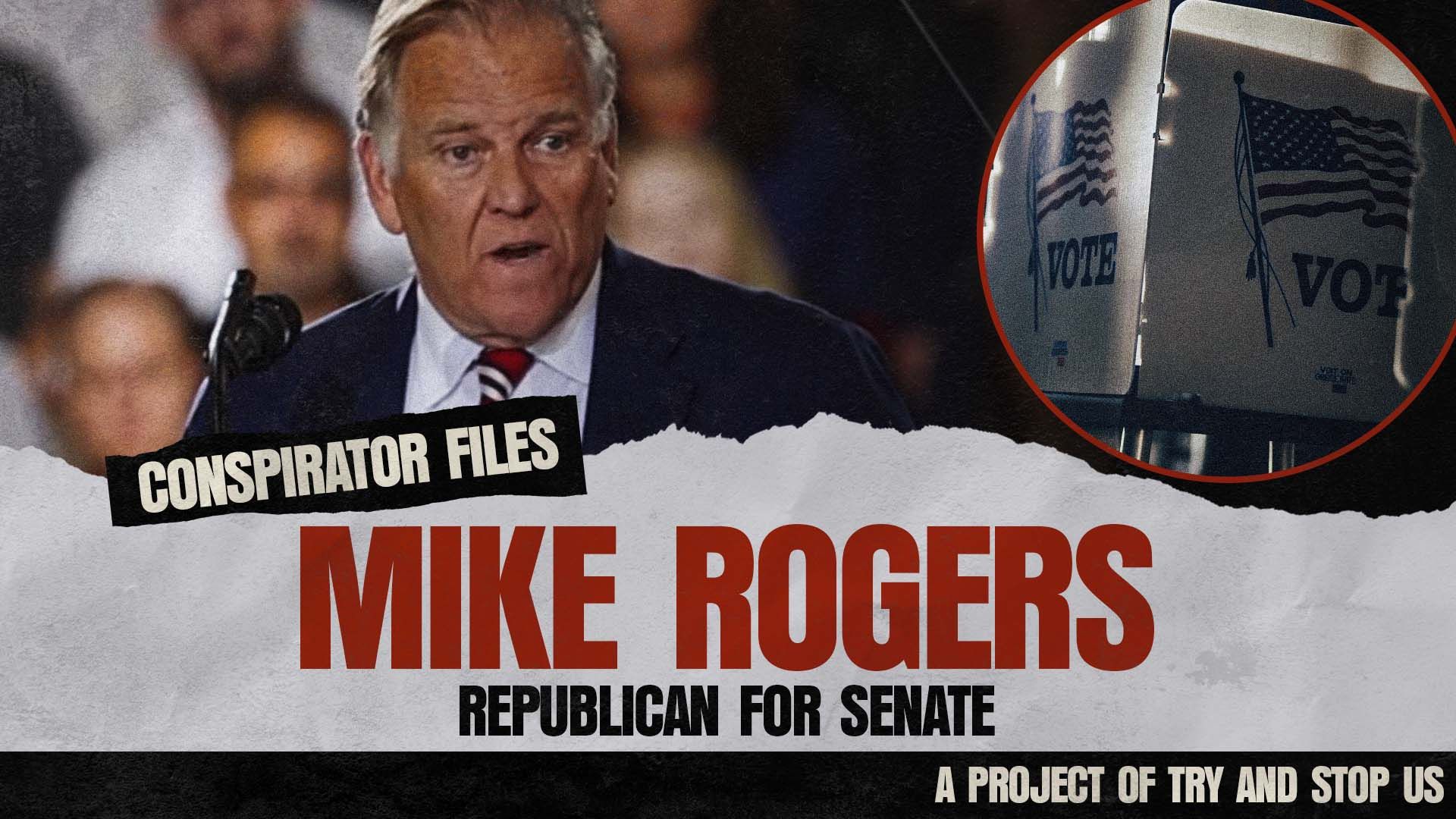
Mike Rogers, the Republican nominee for Senate in Michigan, has changed his position on election conspiracy theories dramatically over the years. He initially accepted the results of Trump’s loss in 2020 and his own loss in 2024, but has expressed greater and greater alignment with election denialism as he’s cultivated MAGA support. Rogers’ earlier stances show that he knows the conspiracies aren’t true, but he’s fully embraced them as he campaigns for Senate and surrounds himself with other election deniers, including campaign officials pardoned by Trump for serving as fake electors.
Worst moments:
- Recognized Trump’s loss in 2020 and his own loss in 2024, but started lying about both elections once he needed MAGA’s support again in 2026.
- Staffed his campaign with election deniers, including two people pardoned by Trump for serving as fake electors and one election official who refused to certify Michigan’s results in 2020.
- Suggested using off-duty and retired police as partisan poll watchers to intimidate Michigan’s largest concentration of voters of color.
History of election denial
In a November 2020 op-ed Rogers urged Michigan officials to certify Biden’s victory and called Trump's attempts to influence Michigan's electoral processes “cause for both concern and alarm.” Rogers also wrote that Trump and some in his party were sowing doubt and conspiracy, and that the election had been found to be “free and fair” by independent observers, the courts, and both parties. He called Trump's pressure on Georgia's secretary of state “more gangster than presidential,” and wrote that the trend of refusing to accept election results without proof of fraud “must end for the sake of our democratic republic.”
But Rogers began to change his tune once he needed Trump's endorsement for his 2024 Senate run against Elissa Slotkin. In June 2024, Rogers refused to answer directly whether Biden won the 2020 election and, asked whether he would defend Detroit voters' rights in a future election, he said he preferred to look forward rather than back. He lost to Slotkin and conceded promptly, making no fraud allegations at the time.
A year after conceding, Rogers began telling Republican audiences his race had been stolen. At a Muskegon gathering in October 2025 he said that at 5:30 in the morning he was winning, and then a van in Detroit showed up with “ballots” and that he lost by about 17,000 votes. Official results and a standard post-election audit confirm Slotkin's win. Christopher Thomas, Michigan's elections director for more than three decades and now an adviser to Detroit election officials, said flatly: “Mike Rogers knows better,” adding that the claim might be more ridiculous than the ones made after 2020 and saying that Rogers knows no one stole either election.
After Trump's July 2026 primetime address on elections, which revived debunked 2020 claims and directed the FBI to reopen a 2020 Muskegon voter-registration case the bureau had closed in September 2025, Rogers posted: “I am thankful for President Trump's commitment to transparency,” calling the news “a voter fraud scheme right here in Michigan.” Rogers’ claims bear no resemblance to the actual case: fraudulent registration applications were submitted in Muskegon in 2020, but every agency that examined it — the Muskegon clerk, Muskegon police, Michigan State Police, and the attorney general's office — found the forms were caught, invalidated, and never became ballots. Despite Trump’s claims that said Biden's administration killed the case, it was actually closed under his own administration.
Having now fully embraced MAGA election denial, Rogers has surrounded himself with election deniers on his 2026 Senate campaign. Two county co-chairs on Rogers’ campaign, Meshawn Maddock and Kenneth Thompson, were given their positions after being pardoned by Trump for their roles in the 2020 fake electors plot, seeking to cast false electoral votes for Trump despite Biden winning Michigan. Another Rogers county co-chair was the lone member of the Board of State Canvassers who refused to certify Michigan's 2020 results, and nearly a dozen others “made statements online promoting conspiracy theories on the presidential election or the Jan. 6 riots.”
Influence over election administration
If elected to the Senate, Rogers will be a major legislative supporter of the restrictive SAVE Act, which could disenfranchise millions of eligible American voters, disproportionately affecting women. Standing beside Trump at a July 2026 rally, Rogers pledged that if the SAVE Act isn't law by the time he arrives, he will pass it. As a Senator, Rogers would also be a vote in support of any conspiracist nominees to senior roles at the Departments of Justice and Homeland Security, giving him the chance to let election-denying foxes directly into the henhouse.
Even more troubling than Rogers’ plans to use his office to affect the 2028 election are his suggestions for what Republicans should do this year. Rogers has endorsed sending police to intimidate voters at the polls. The Detroit News obtained audio of Rogers addressing the Kalamazoo County GOP in April 2026, where he said he was cooperating with the RNC on voter “integrity” efforts, and reported that in conversations with Republican officials he has advocated stationing retired or off-duty police officers as party poll watchers in Detroit. Rogers’ proposal mirrors Trump’s scheme to send sheriffs and police to polling places in 2020, a move he later expressed regret at not following through on. Federal and Michigan law prohibit voter intimidation, and federal law bars officials from sending armed men near polling places. One local election official accused Rogers of singling out Detroit as an attempt to intimidate the state's largest concentration of voters of color.
Most concerning of all is Rogers’ campaign’s hiring of at least two individuals convicted then later pardoned for crimes committed in an attempt to overturn the 2020 election. Whatever methods Republicans use to try and prevent a democratic transfer of power, the pardons for Rogers’ county co-chairs could serve as a blueprint for attempts at consequence-free sabotage.
Don’t read the next headline alone.
Get rapid-response alerts and the real story behind the headlines, straight to your inbox.
Get InvolvedKeep Reading
Andy Biggs: Republican for Arizona Governor
The Republican candidate to govern a key 2028 swing state is one of the most infamous 2020 election deniers.
Read More
Bill Huizenga and Tom Barrett: Election Deniers for Congress
Bill Huizenga and Tom Barrett are election deniers and the Republican nominees for two of Michigan’s seats in the House of Representatives.
Read More
John James and Mike Rogers: Election Deniers for Michigan
John James and Mike Rogers are, respectively, the Republican nominees for Governor and Senator in this year’s election in Michigan.
Read More