
Andy Biggs: Republican for Arizona Governor
The Republican candidate to govern a key 2028 swing state is one of the most infamous 2020 election deniers.
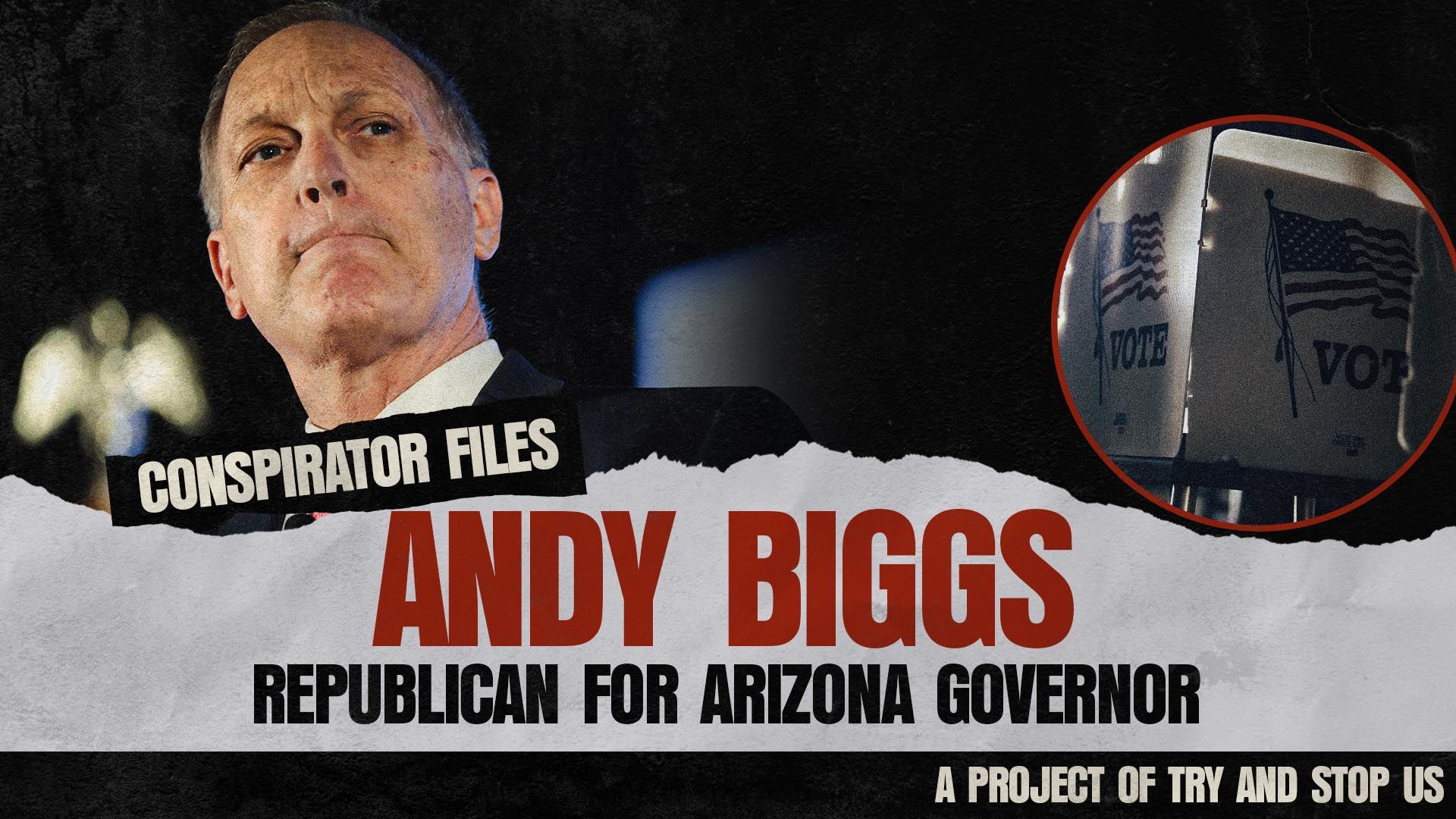
The Republican candidate to govern a key 2028 swing state is one of the most infamous 2020 election deniers. Andy Biggs began publicly contesting Biden’s victory in Arizona before officials even finished counting the votes, while privately laying the groundwork for the fake electors plot and the Pence vote-rejection scheme that became the January 6 insurrection. Biggs has never faced consequences beyond a referral to the House Ethics Committee for refusing to cooperate with the investigation into the riot, and is now aiming to assume the leadership of a key swing state and secure major influence over election laws and procedures in one of the most important states in the next presidential election.
Worst moments:
- Began coordinating the fake electors plot with Mark Meadows as early as November 6, 2020, and continued pushing for rejecting Arizona’s lawful electors until January 6, 2021, when he voted against to reject his state’s results.
- Participated in an early White House meeting on the plan for Pence to discard swing states’ electoral votes, and allegedly helped plan the “Stop the Steal” rally that called for Pence to do so on the morning of January 6.
- Refused to cooperate with the Congressional investigation into the efforts to overturn the election, which eventually concluded that he played a major role. Biggs allegedly sought a presidential pardon for his activities.
History of election denial
Biggs was one of the very first 2020 election deniers, as he began contesting Arizona's outcome before counting even finished. On November 4, 2020, he announced he believed Trump would win Arizona and that the race never should have been called for Biden, and on November 7 Biggs publicly urged Trump to keep fighting.
Meanwhile, behind the scenes, Biggs was laying the groundwork for the fake electors plot, one of the most insidious attempts at reversing Biden’s victory. Illegitimate alternate-elector paperwork was ultimately submitted to Congress from seven states, including Arizona. Biggs took several steps to advance the scheme:
- On November 6, 2020, Biggs texted White House chief of staff Mark Meadows proposing that Republican-controlled legislatures in contested states appoint alternate electors for Trump. Biggs wrote that the idea was to encourage state legislatures to appoint electors in states where there had been “shenanigans,” noted that most such states had Republican legislatures, acknowledged the plan would be “highly controversial,” and asked whether anyone on the team was researching or lobbying for it.
- Text messages released by a far-right Arizona legislator Mark Finchem show Biggs apparently coordinating with the then-state representative to gather signatures from Arizona lawmakers endorsing a slate of fake electors; Finchem told Biggs he had delivered signatures from Arizona lawmakers to the Vice President.
- Under oath before the select committee, the Republican Speaker of the Arizona House testified that Biggs called him the morning of Jan. 6, 2021, asking him to “support the decertification of the electors.”
Biggs was also an early advocate for the plan that called for Vice President Pence to refuse to count electoral votes from some states, providing the kernel for what developed into the January 6 insurrection. Biggs has even been alleged to have helped plan the “Stop the Steal” rally that immediately preceded the riot, and was referred to the House Ethics Committee for refusing to comply with the investigation into the events:
- In December 2020, Biggs attended a White House meeting with other Freedom Caucus members at which the discussion included a plan for Vice President Pence to refuse to count certain states' certified electoral votes.
- In a since-deleted video, “Stop the Steal” organizer Ali Alexander said he planned the Jan. 6 rally with Biggs, Paul Gosar and Mo Brooks. Biggs has denied it, though Alexander later told the committee, through counsel, that he spoke with Biggs in person and never by phone to the best of his recollection. Alexander introduced Biggs at a December 2020 Stop the Steal rally and played a video message Biggs had recorded for the event.
- The Congressional committee investigating January 6 sought a voluntary interview with Biggs in May 2022, citing information about his efforts to convince state officials the election was stolen; Biggs refused to cooperate. He then defied a subpoena, and was among four Republican members referred to the House Ethics Committee for noncompliance.
Ultimately, as Congress reconvened after the violence ended, Biggs voted to reject his own state’s results.
The Congressional January 6 committee’s final report implicated Biggs as a significant player in Trump's effort to thwart the results. Several witnesses testified to Congress that Biggs sought a pardon from Trump for his efforts to overturn the election.
Biggs continues to deny Arizona’s 2020 results, even after a Republican-backed audit confirmed Biden’s victory. Arizona Senate Republicans commissioned an analysis of Maricopa County ballots that reviewed more than 2 million ballots and verified Biden's win by 360 more votes than originally reported, while nonetheless alleging procedural flaws which the county rebutted in detail. Biggs would not accept even that. At an October 2021 House Oversight hearing, Rep. Jamie Raskin asked him directly who won Arizona. Biggs responded, “We don't know,” and added that “there are a lot of issues with this election that took place.”
In May 2026 he would not say whether Biden legitimately won in 2020 or whether the Democratic candidate legitimately won the Arizona governor’s race in 2022, and when CNN asked gubernatorial nominees in battleground states whether Biden won in 2020 and whether they would commit to certifying the 2028 winner Biggs's campaign did not respond to CNN's multiple requests for comment.
Influence over election administration
Biggs is on the record expressing support for the Arizona governor’s office becoming more involved in election administration. In a late-2020 TV interview, he complained that then-Governor Doug Ducey “could have invalidated the election” but “wasn't interested in doing that.” Biggs believes that the governor has the power to nullify a presidential result, and even faulted a previous Republican officeholder for declining to do so.
Arizona is one of the swing states that routinely decide presidential elections, and the governor has significant formal powers that Biggs could use to influence the process in his preferred direction:
- Veto power over the Elections Procedures Manual. Under Arizona law, the secretary of state's official instructions and procedures manual must be approved by the governor and the attorney general before issuance. The manual has the force of law and takes effect only upon approval by the attorney general and governor. The next cycle is 2027, meaning a governor sworn in January 2027 would hold approval authority over the binding rulebook for the 2028 presidential election, including procedures for early voting, counting, tabulating and storing ballots. A withheld approval would leave Arizona heading toward a presidential election without an updated manual.
- Signing election legislation. The Republican legislature has passed a steady stream of election bills that only a veto has stopped. One analysis found that sitting Governor Katie Hobbs vetoed 21 election bills in 2023, seven in 2024, 29 in 2025, and 10 of 21 in the 2026 session — more election bills than any other governor in the country this year. Among the vetoed measures: a bill removing counties' ability to establish voting centers and on-site early voting locations and capping precincts at 1,000 voters, a bill changing how hand-count audits are conducted, a bill moving up early-ballot drop-off deadlines, a bill adding requirements to stay on the Active Early Voting List, and one bill banning voting centers outright. Biggs has indicated that he is “inclined” to sign “a whole host” of these bills, and told the Daily Signal he wants to pass a Florida-style election integrity bill, calling the Florida SAVE Act the “gold standard.”
- The certificate of ascertainment. Under the Electoral Count Reform Act, the governor submits the certificate identifying the state's electors unless state law says otherwise, and Congress cannot accept a slate from anyone else. A Governor Biggs would hold that pen following the 2028 presidential election, a significant threat given his refusal to commit to certifying the results.
- Cooperation with federal election investigations. The Trump administration is actively reinvestigating the 2020 election in Arizona. In March 2026, Arizona Senate President Warren Petersen announced he had complied with a federal grand jury subpoena for records from the chamber's 2021 review of Maricopa County, which concluded Biden won the county. The subpoena confirmed that as part of a federal grand jury criminal investigation the FBI sought forensic images, videos, hard drives and other documents. Homeland Security Investigations has separately sought records from the Arizona Attorney General's office relating to her predecessor’s 2020 investigation, which also found no widespread fraud. In a defeat for the administration’s campaign to pressure states into giving up their full unredacted voter files, a federal judge dismissed the DOJ's seeking Arizona's voter data. A shift in power would transform the state from one that resists the administration's efforts to rehash 2020 into one that cooperates enthusiastically.
Don’t read the next headline alone.
Get rapid-response alerts and the real story behind the headlines, straight to your inbox.
Get InvolvedKeep Reading
Bill Huizenga and Tom Barrett: Election Deniers for Congress
Bill Huizenga and Tom Barrett are election deniers and the Republican nominees for two of Michigan’s seats in the House of Representatives.
Read More
John James and Mike Rogers: Election Deniers for Michigan
John James and Mike Rogers are, respectively, the Republican nominees for Governor and Senator in this year’s election in Michigan.
Read More
Ashley Hinson: Republican for Senate
Ashley Hinson’s record epitomizes the rhetoric of a soft denialist.
Read More