
Max Miller and Derek Merrin: Vulnerable Election Deniers
Max Miller and Derek Merrin are election deniers and the Republican nominees for two of Ohio’s seats in the House of Representatives.
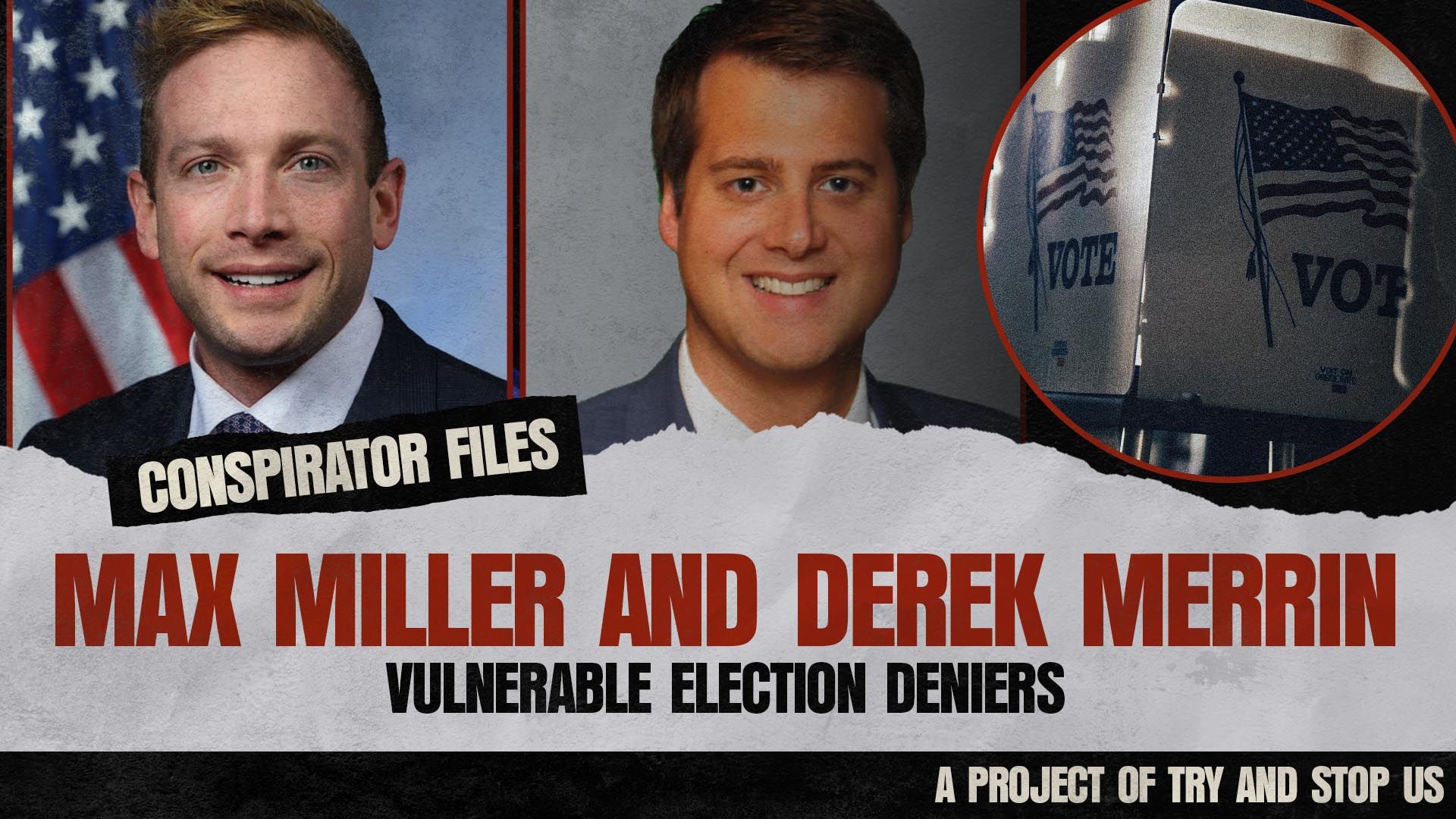
Max Miller and Derek Merrin are election deniers and the Republican nominees for two of Ohio’s seats in the House of Representatives. Miller has been in Congress since 2022, while Merrin is a former state representative who ran for Congress in 2024 but lost to Democrat Mary Kaptur. Running in two of this year’s most competitive House districts, Miller and Merrin represent some of democracy supporters’ biggest opportunities to refuse the election denial caucus more seats in Congress.
Worst moments:
- Merrin participated in an effort to have Ohio join a lawsuit that sought to discard four swing states’ electoral votes for Biden in 2020, then spent the remainder of his time in the legislature helping pass voter suppression measures.
- Miller helped plan the rally that incited the January 6 attack, then insisted that it was “not an insurrection.”
- Miller appeared alongside Trump at his first post-presidency rally, received Trump’s endorsement as part of a campaign to punish Republicans who had voted for impeachment, and retained Trump’s support amid allegations of domestic violence.
History of election denial
In the crucial period between Trump’s defeat in the 2020 election and Biden’s inauguration in January 2021, Miller and Merrin held very different posts. Merrin was an elected official, representing the 47th district in the Ohio House of Representatives, while Miller was a party operative serving on Trump’s reelection campaign. Despite occupying positions at different levels of government and with different relationships to the public, both men used the levers available to them for the same purpose: overturning the American people’s choice to kick Donald Trump out of office.
In December 2020, Merrin was one of 42 Ohio legislators to sign a letter urging Ohio Attorney General Dave Yost to join Texas’ lawsuit against Wisconsin, Michigan, Georgia and Pennsylvania. The letter alleged “unexplained statistical anomalies” in the four swing states, and asked Yost to join the 17 Republican-led states that supported Texas’ efforts to discard the results in those four swing states.
The MAGA effort to nullify four states’ voters’ choice went too far even for some in the GOP. Yost, a Republican, filed a brief asking the Court to rule only on the Electors Clause question, not to stop Biden’s win. Yost and his solicitor general told the Court that ordering state legislatures to appoint their own electors would violate the Constitution. The Supreme Court rejected the lawsuit, finding Texas lacked standing to challenge how other states run their elections, and even Justices Alito and Thomas, notorious right-wingers who have since demonstrated belief in election denial themselves, said they would not have set aside those states’ 62 electoral votes while the case proceeded as Texas wanted.
As the efforts to overturn the election through the courts failed, the election denial movement turned to more lawless tactics, and Miller took a more central role. Miller had been in Trump’s orbit since 2016, working on Trump’s initial campaign before moving to a post in the White House and then returning to help run Trump’s reelection effort in 2020. It was in this role that Miller reportedly helped plan the January 6 rally at the Ellipse where Trump used violent imagery and urged Pence to overturn the results. In December 2021, the January 6 committee subpoenaed Miller as one of six people it said helped organize rallies aimed at overturning Trump’s 2020 defeat. The committee said Miller and another aide met with Trump in the private dining room off the Oval Office on January 4 to discuss the upcoming rally and its speaker lineup.
Miller has repeatedly dismissed the seriousness of what he helped set in motion. In June 2021, he told the Washington Times “what happened on January 6 was not an insurrection,” and when subpoenaed by the January 6 committee, Miller pledged that one of his first votes in office would be to “disband this partisan committee that has weaponized its powers against innocent Americans.” Politico called his interview the “most hostile” among the transcripts released at that point. Miller refused to say whether he had worked on the event and accused investigators of setting a perjury trap. He argued his phone logs showed no calls during the riot, but investigators pointed out the logs were in Greenwich Mean Time and that he had in fact received calls from White House officials while the riot was underway.
After both men’s attempts to keep Trump in office failed, Merrin joined an effort by GOP legislators across the country to suppress the vote in future elections. Merrin’s campaign says he played a key role in Ohio’s photo-ID requirement, which was implemented by a law that also dropped the Monday before Election Day as an early-voting day, moved the mail-ballot application deadline to seven days before the election, limited counties to one drop box, and shortened the window to cure provisional ballots.
Influence over election administration
Both Miller and Merrin are fully aligned with Trump’s legislative agenda. Miller was endorsed by Trump in his campaign to punish Republicans who voted to impeach him or blocked his efforts to overturn 2020. Trump's first post-presidency rally was held to support Miller, and Trump used it to repeat his claims about Biden's victory. Even as Miller faced calls from other Republicans to drop out over allegations of “domestic violence and abuse,” Trump never called for him to exit, and he called Miller “a good person.” Merrin was initially recruited to run for Congress after audio surfaced of his rival criticizing Trump; Trump endorsed him hours before the March 2024 primary, calling him “an incredible America First Patriot.” Merrin thanked Trump and promised to work with him if elected.
Specifically, both are strong supporters of the SAVE Act, a restrictive voting bill that could disenfranchise millions of eligible American voters, disproportionately affecting women. Miller has repeatedly voted for the SAVE Act in the House, and even joined 13 other Republicans in blocking a slate of bills, including the must-pass defense bill, unless the related SAVE America Act was written into the defense bill itself. Nearly all Republicans back the bill, but the blocking tactics split the party, and the revolt stalled the House for the second week in a row. Miller said he was “very disappointed [Speaker Johnson] is willing to shut Congress down.” Though Merrin’s defeat in 2024 has denied him the opportunity to back the SAVE ACT from a seat in Congress, he’s made his support for the bill clear: in 2024, Merrin attacked Democrat Mary Kaptur for voting against the SAVE Act and pledged to “continue to champion the integrity of our elections” in Congress.
Most concerningly, Miller and Merrin could use their House seats to vote against certification of 2028 election results, if re-elected. Though a law passed in 2022 was intended to limit the grounds on which members of Congress can object to states’ electoral votes, Miller’s loyalty to Trump and Merrin’s support for throwing out legitimate electoral votes in 2020 suggest that both men could support spurious and illegitimate objections to a future Democratic presidential election victory.
Don’t read the next headline alone.
Get rapid-response alerts and the real story behind the headlines, straight to your inbox.
Get InvolvedKeep Reading
Vivek Ramaswamy: Republican for Ohio Governor
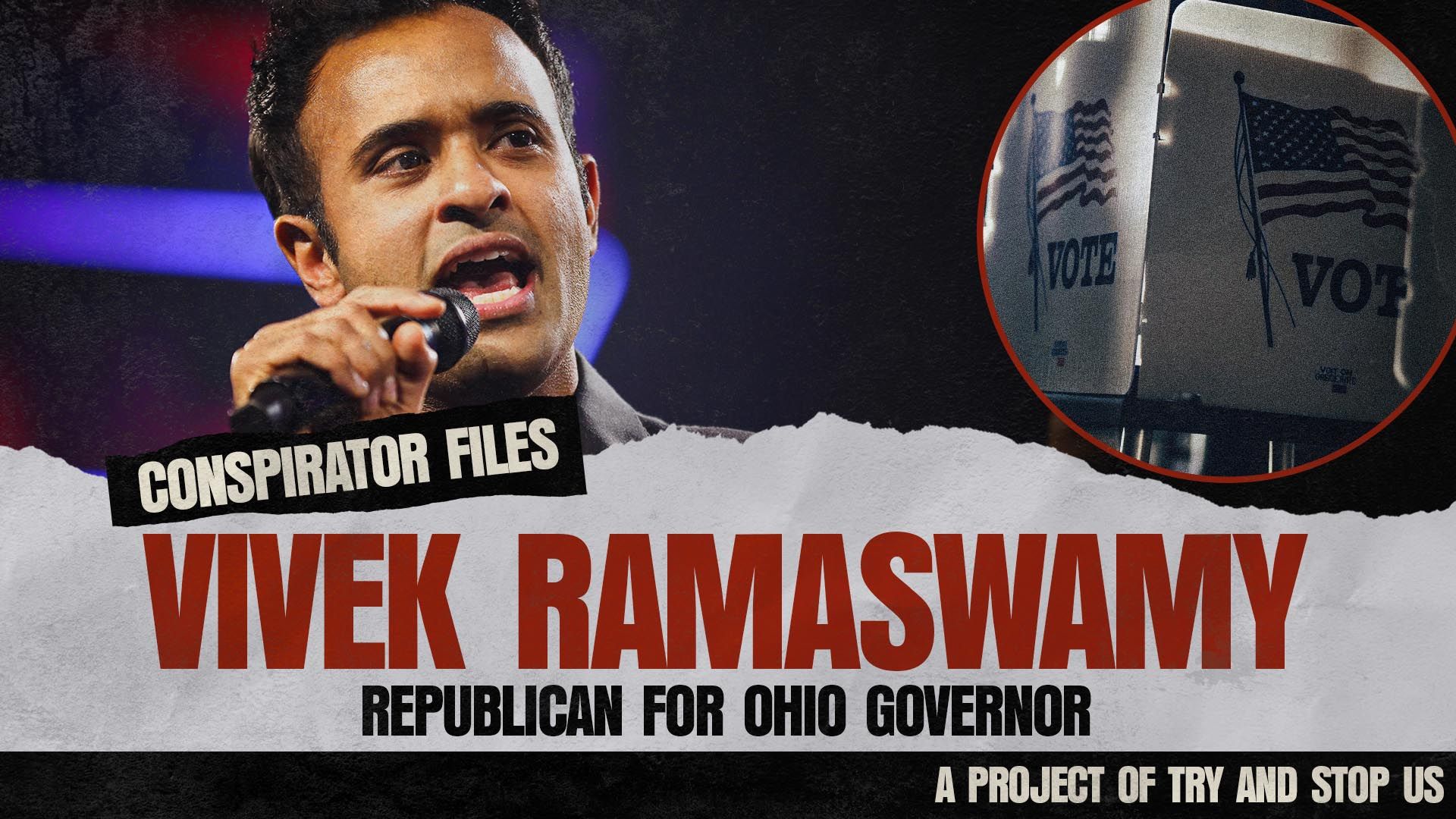
Vivek Ramaswamy is a businessman and former presidential candidate who is now the GOP nominee to serve as Governor of Ohio.
Read More
North Carolina State Board of Elections: MAGA’s Committee To Rig The Rules
Francis De Luca, Stacy Eggers IV, and Angela Hawkins are the three Republicans who run the North Carolina State Board of Elections.
Read MoreDave Boliek: North Carolina State Auditor
Dave Boliek is the only State Auditor in the country with authority over his state’s elections, the result of a power grab by election-denying Republicans.
Read More