Alex Kolodin and Warren Petersen: Election Deniers for Arizona’s Elections
Alexander Kolodin and Warren Petersen are two members of the Arizona legislature with deep roots in election denial.
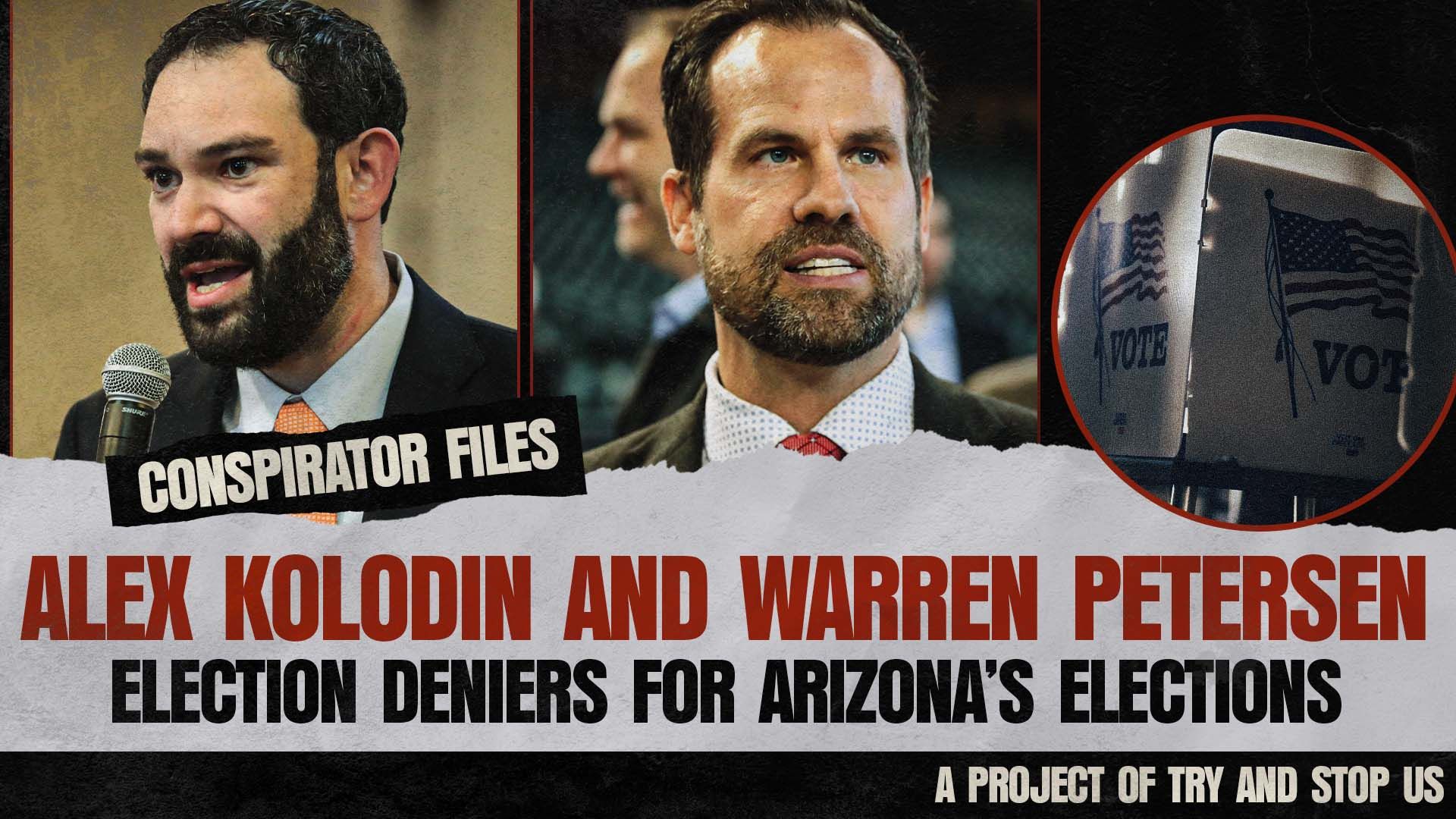
Alexander Kolodin and Warren Petersen are two members of the Arizona legislature with deep roots in election denial, running for the state offices that could give them the power to rewrite the rules in their favor. Petersen, a state Senator who used his position to push for investigations that unsuccessfully sought to prove conspiracy theories about the 2020 election, now seeks to wield even greater investigative power as Attorney General. Kolodin, a member of the Arizona House of Representatives, is best known for his earlier work as the go-to lawyer for the Arizona election denial movement, and is now running to oversee elections as Secretary of State.
Worst moments:
- Petersen helped spearhead a “review” of the 2020 election that turned over millions of voters’ records to a pro-Trump firm with no election experience, only for that “audit” to find no evidence of fraud and an increased margin for Biden.
- Kolodin was disciplined by the Arizona state bar for his role in filing baseless cases as the go-to lawyer of the Arizona election-denial movement. His clients have included the fake Trump 2020 electors, Republican officials avoiding their lawful duty to certify elections, and the Arizona GOP in its attempts to ban all mail voting.
History of election denial
Warren Petersen has wielded his authority as Senate Judiciary chair to promote election denial conspiracy theories, most infamously through his leadership of an infamously partisan review of the 2020 vote in Maricopa county. Petersen and then-Senate President Karen Fann jointly issued subpoenas for Maricopa County’s election materials; once a judge upheld them, the county turned over 2.1 million ballots, hundreds of counting machines and terabytes of data. A later round demanded mail-ballot envelopes, network routers, voter registration records with change histories, and administrator-level access to every Dominion tabulator in the county. Petersen and Fann then selected a firm called “Cyber Ninjas” to conduct an audit of the results, and later communications revealed that they remained closely involved with the audit, including receiving regular briefings on its proceedings.
Petersen and Fann chose “Cyber Ninjas” despite the company having no election-related experience and being led by a vocal proponent of 2020 election conspiracy theories. The firm’s leadership acknowledged not knowing anything about Arizona election law, and made a variety of unsubstantiated claims that experts showed resulted from a complete lack of familiarity with election processes. Republican Attorney General Mark Brnovich’s investigators later examined Cyber Ninjas’ claims and concluded there was no evidence of fraud or manipulation. Despite making every attempt to justify Republicans’ fraud claims, the report’s final recount increased Biden’s margin of victory.
In March 2026, Petersen announced he had complied with a federal subpoena for the Senate’s records relating to the audit, part of the Trump administration’s broader attempts to obtain state-level voter data across the country. When current Arizona Attorney General Kris Mayes asked for more information on what Petersen had turned over to the FBI, including whether the materials included Maricopa voter registration records, Petersen referred both Mayes and Secretary of State Fontes to the Justice Department for obstruction. Years after the failed “audit”, Petersen turned over the information he gathered to yet another attempt at “disproving” Trump’s loss while targeting state officials who stood up for Arizona voters’ privacy.
While Petersen was using his authority as a legislator to promote election denialism, Arizona lawyer Alexander Kolodin was propelled to the legislature through the notoriety he achieved as the local representative of one of the most insidious legal attempts at overturning the 2020 election. Kolodin was counsel of record in Bowyer v. Ducey, the lawsuit alleging that voting machines were hacked to fraudulently elect Joe Biden and down-ballot Democrats, and asking the court to set aside the results and send a slate of fake pro-Trump electors. Kolodin was the only attorney on the case licensed to practice in Arizona, allowing it to be filed there. A federal judge dismissed it within a week, finding the complaint “void of plausible allegations that Dominion machines were actually hacked or compromised in Arizona,” and the allegations “sorely wanting of relevant or reliable evidence.” The 300-plus pages of attachments consisted largely of anonymous witnesses, hearsay, and analysis of unrelated elections. Kolodin continued to represent participants in the fake electors plan even after their plot collapse, arguing in a filing to block the January 6th committee from obtaining the state party chair's phone records that the Trump electors had merely created a backup plan in case legal challenges succeeded.
Kolodin has since become the “go-to attorney when someone wanted to challenge election results” in Arizona:
- As counsel to a firm hired by Republicans during Petersen’s “audit,” Kolodin sought to keep the firm's ballot-review policies and procedures from the public and argued the company was not required to use bipartisan review teams.
- Kolodin sued on behalf of the Arizona Republican Party to end mail voting, arguing that any voting other than in person on Election Day is unconstitutional. The suit asked the court to throw out all early voting procedures, or to roll back no-excuse absentee voting to pre-1991 rules and eliminate drop boxes.
- Kolodin represented the Cochise County recorder and the supervisors who pushed a full hand count of 2022 ballots, which a judge blocked. Kolodin then filed a Bar complaint against Cochise County Attorney Brian McIntyre, the Republican who had told the board the hand count had no legal basis.
- Kolodin represented Clean Elections USA, a group that was ordered by a federal judge to stay over 75 feet from ballot drop boxes in Maricopa County after they were sued for voter intimidation.
In December 2023 Kolodin entered into a settlement with the Arizona State Bar in which he accepted an admonition and received 18 months of probation for his role in the 2020 cases. A Supreme Court disciplinary panel found he “violated his duty to the legal profession, the legal system, and the public” by bringing cases backed by no evidence that misrepresented Arizona law and sought illegal relief.
Influence over election administration
The secretary of state is Arizona's chief elections officer, giving Kolodin immense authority over the state’s 2028 presidential election if he prevails in 2026. The office certifies voting equipment and statewide results, issues the rules governing election administration, and plays a central role in presidential certification. As Arizona’s chief legal officer, the Attorney General’s responsibility to enforce election law through civil and criminal actions and to seek court orders compelling officials to act would also give Petersen significant authority over the 2028 election if elected.
Under Arizona law the Secretary of State writes the Elections Procedures Manual, the official instructions and procedures manual for early voting, voting, and the producing, distributing, collecting, counting, tabulating and storing of ballots. The rules must then be approved by the Governor and Attorney General before issuance. The next manual would be written in 2027, giving Kolodin direct authority over the binding rulebook for the 2028 presidential election, subject to Petersen’s approval.
While Arizona law makes certification a mandatory duty for state and local canvassers, and the Secretary of State cannot lawfully refuse to certify election results, Kolodin represented Cochise County officials in their attempts to avoid certifying election results in 2022 at all costs, and Petersen has pledged to drop the case against one official facing felony charges for refusing to certify. Kolodin and Petersen have shown a sympathy for – or represented – election officials who are willing to flout the law that could pose a significant threat in the event of a contested certification.
Petersen’s election as Attorney General would mark a shift in election enforcement that would extend beyond the Cochise County case. Petersen has promised to expand the Election Integrity Unit in the criminal division, saying people will know his office is serious about election crimes “just like they know the Trump DOJ is serious about it right now.” Meanwhile, when a judge dismissed the case against Arizona’s 11 fake electors and their allies in August without prejudice, Petersen called it a witch hunt and pledged: “On my first day in the attorney general’s office this madness ends.” Petersen has demonstrated his full intent to redirect the state’s legal resources away from punishing actual anti-election conspirators and towards Trump-style persecutions of everyday voters.
Don’t read the next headline alone.
Get rapid-response alerts and the real story behind the headlines, straight to your inbox.
Get InvolvedKeep Reading
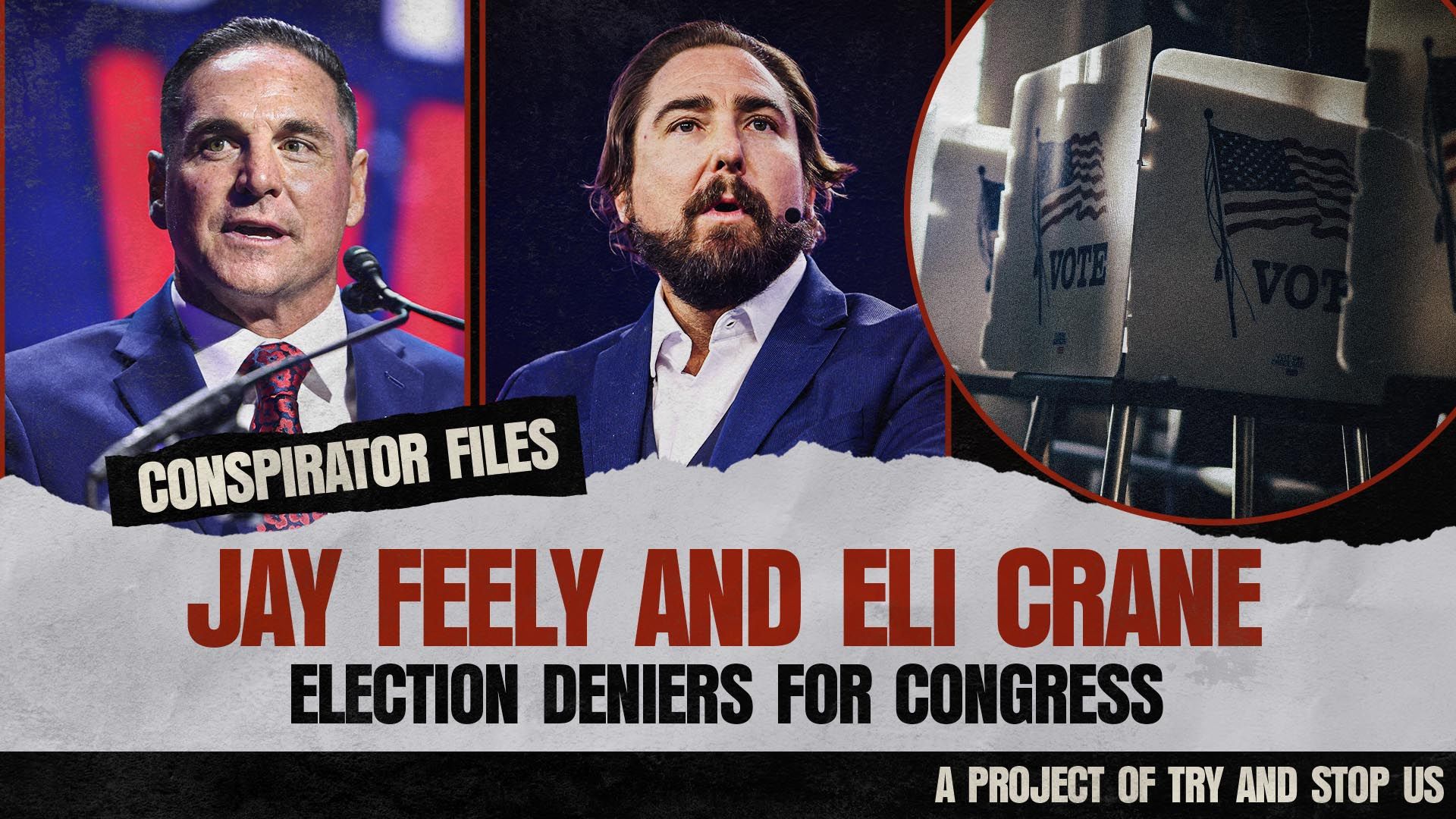
Jay Feely and Eli Crane: Election Deniers for Congress
Jay Feely and Eli Crane are election deniers and the Republican nominees for two of Arizona’s seats in the House of Representatives.
Read More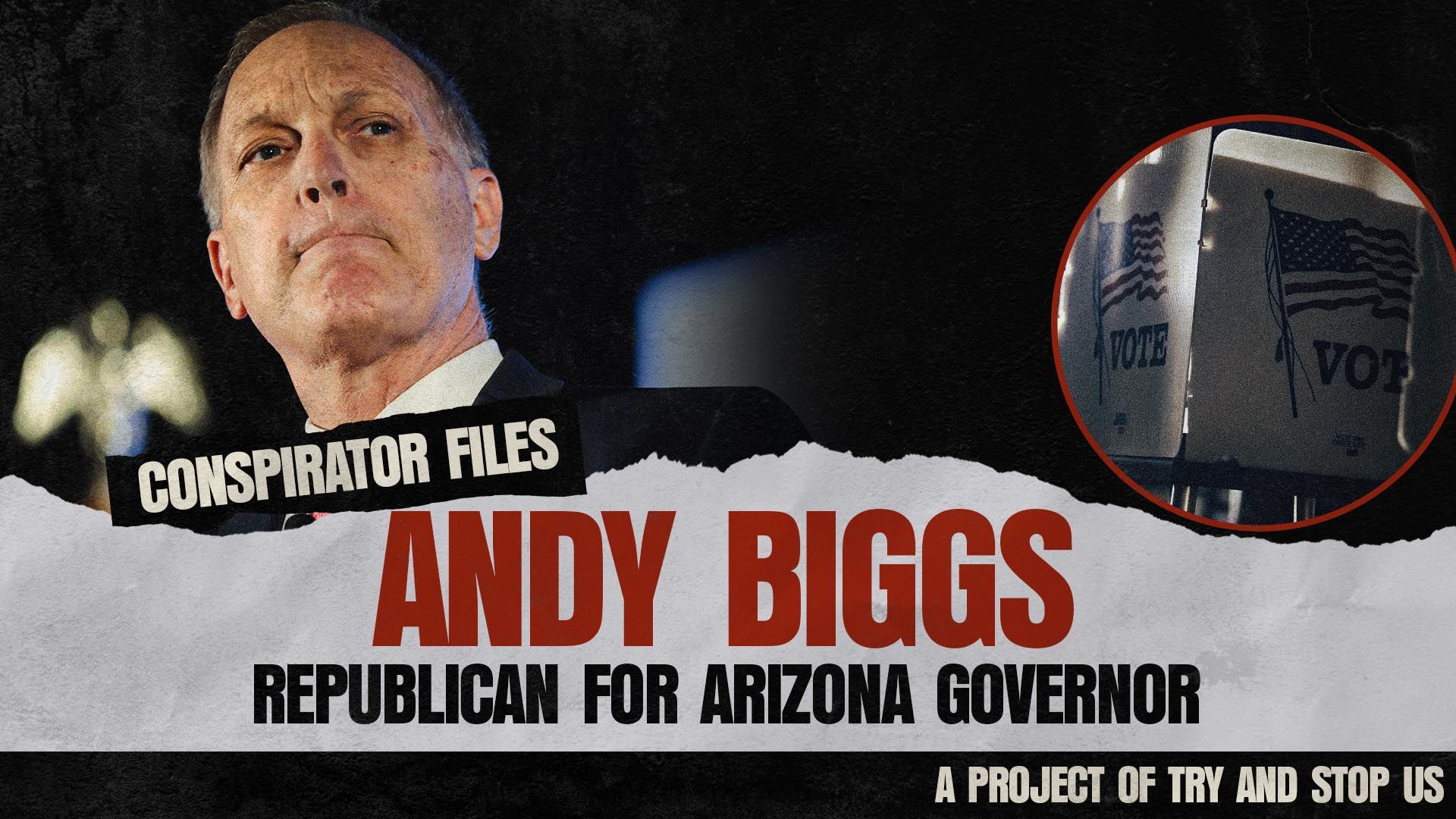
Andy Biggs: Republican for Arizona Governor
The Republican candidate to govern a key 2028 swing state is one of the most infamous 2020 election deniers.
Read More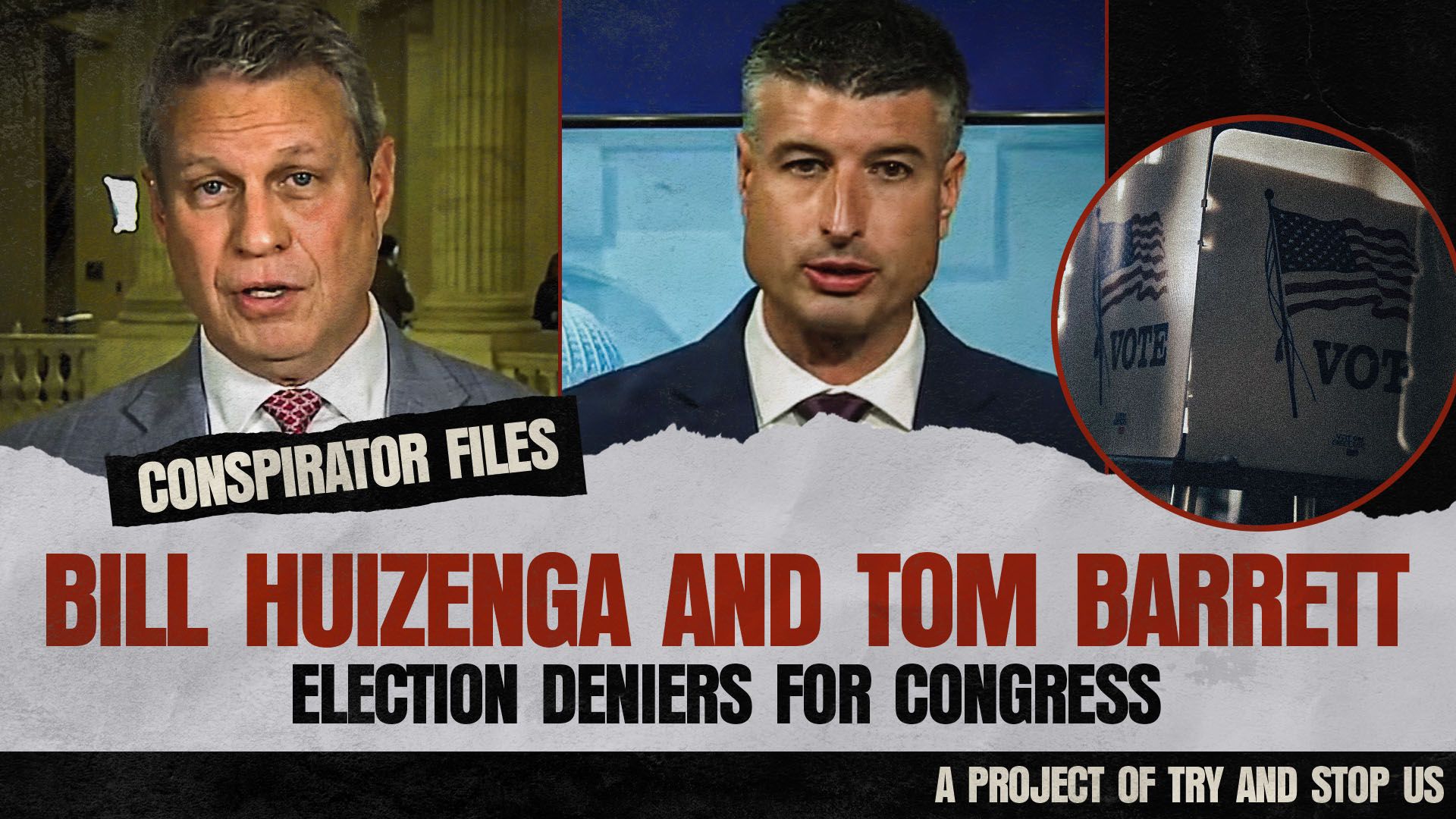
Bill Huizenga and Tom Barrett: Election Deniers for Congress
Bill Huizenga and Tom Barrett are election deniers and the Republican nominees for two of Michigan’s seats in the House of Representatives.
Read More