
Mike Johnson: Speaker of the House
Mike Johnson is a leading 2020 election denier who now serves as Speaker of the House.
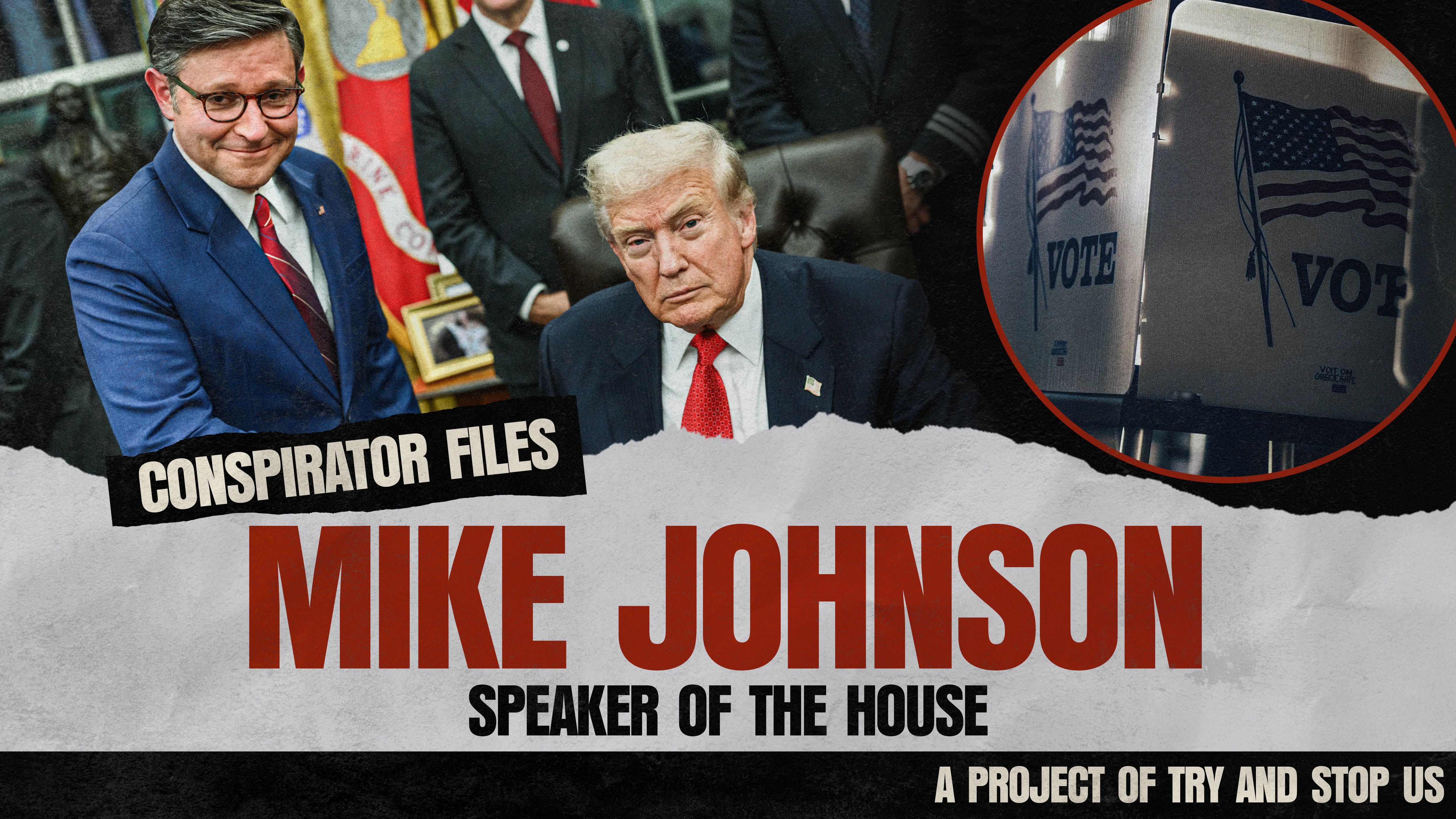
Mike Johnson is a leading 2020 election denier who now serves as Speaker of the House. After trying to overturn Biden’s electoral victory in Congress and the courts, Johnson now leads the Congressional election denial caucus, repeatedly casting doubt on election results that don’t go his way, championing federal legislation that would disenfranchise millions, and refusing to answer questions about whether he will honor the results of the midterm elections if they give Democrats a House majority.
Worst moments:
History of election denial
Mike Johnson, at the time a fourth-year congressman chairing the Republican Study Committee, was one of the principal legal drafters of the congressional effort to block certification following the 2020 election. Despite being told by a lawyer for House Republican leadership his arguments were unconstitutional, Johnson advanced outlandish arguments for rejecting electoral votes for Biden, earning the label of “the most important architect of the Electoral College objections.”
Johnson did not confine himself to legal theory, but joined his Republican colleagues in peddling debunked conspiracy theories. In a November 2020 Louisiana radio interview he endorsed the claim that Dominion and Smartmatic had flipped millions of votes, saying allegations that machines were rigged had merit and describing software “that is suspect because it came from Hugo Chávez's Venezuela.” He also asserted that Georgia's election was rigged and its system built for massive fraud, a claim contradicted by three statewide tallies overseen by Republican officials that confirmed Biden's win and found no systematic irregularities.
Johnson also supported Republicans’ efforts to negate Biden’s win through the courts. Johnson emailed every House Republican from a personal account soliciting signatures for a brief supporting Texas's suit to invalidate electoral votes in Georgia, Michigan, Pennsylvania and Wisconsin, telling colleagues Trump was awaiting the final list of signatories. The filing went to the Supreme Court as the brief of “U.S. Representative Mike Johnson and 125 Other Members.” The Court rejected the request four days after the suit was filed.
Even after the attempted insurrection on January 6, Johnson maintained his efforts to overturn the election, and even voted against an investigation into the attack. Hours after the Capitol was cleared, Johnson voted to sustain objections to Arizona's and Pennsylvania's electors, a move that would have stripped Biden of 31 legitimately won electoral votes and disenfranchised millions of voters. The House rejected the Arizona objection 121–303 and the Pennsylvania objection 138–282. In May 2021 Johnson, along with every other House Republican leader, voted against establishing a national commission to investigate the attack.
Since his election as House Speaker Johnson has doubled down on his election denialism and even attempted to replicate the pattern in other races:
- In an October 2024 interview he baselessly claimed there would be cheating in that year’s presidential election and that noncitizens would vote.
- In February 2026, responding to concerns about the FBI's raid on a Fulton County election office, Johnson named Georgia as the leading example of 2020 election “schemes,” and, when reminded by a journalist that statewide recounts confirmed Trump's loss and that no legitimate integrity questions remained, replied: “That's your opinion.”
- In June 2026, after mail ballots counted post-Election Day reordered California primary results, Johnson said the outcome “stinks to high heaven.” Pressed for evidence of fraud, he said some efforts are too diabolical and far upstream to prove but that everyone knows instinctively something is wrong.
Influence over election administration
As House Speaker, Johnson is uniquely positioned to tilt the playing field in Republicans’ favor in upcoming elections, with several possible tools at his disposal.
Federal voting legislation: Johnson has made proof-of-citizenship and voter-ID mandates a personal project across multiple Congresses, repeatedly championing the SAVE Act despite critics warning that the legislation would create registration hurdles that could disenfranchise as many as 21 million legitimate voters. When pressed about the necessity of the bill, Johnson conceded that non-citizen voting is already a federal crime, but argued people know “intuitively” that it happens while admitting he could not provide any estimate. A Brennan Center review of the 2016 general election found roughly 30 suspected — not confirmed — noncitizen votes out of 23.5 million, about 0.0001 percent.
Johnson also backed a more expansive bill, the SAVE America Act, which would add a polling-place documentation requirement stricter than nearly every existing state voter-ID law and require every state to submit its voter rolls to DHS for comparison against its database. Johnson has used every procedural method available to try and pass the bill. In July 2026 he said the House would pass the bill once more inside a budget reconciliation package to get it past the Senate filibuster and onto Trump's desk. Trump has said the bill would “guarantee the midterms”; as of the August recess, Senate Republicans deferred most of it, with conservatives conceding they lacked the votes.
Redistricting: After the Supreme Court's ruling narrowing the Voting Rights Act, Johnson has been a major advocate of Republicans’ push to redraw congressional maps before the midterms. He told a donor retreat in May that he expects Republicans to net seven to eight seats through mid-decade redistricting. CNN assessed that Republicans were poised to finish the redistricting war roughly ten seats ahead, with several GOP states moving election dates and eliminating districts with sizable Black populations. Even before the ruling, Johnson attempted to use his influence in the party to convince Indiana legislators to redraw their state’s maps with the goal of helping Republicans keep control of the House.
Seating members: The Constitution makes each chamber the judge of its own members' elections, and the House may by majority vote determine who holds a contested seat. Under the 1969 Federal Contested Elections Act only a losing candidate can initiate a contest, but a Speaker commanding a majority would control how the House disposes of one. House rules also let the Speaker unilaterally replace the clerk, who controls which certificates of election are on file when a new Congress convenes. Johnson has already demonstrated willingness to use seating as leverage. He swore in Rep. Adelita Grijalva more than seven weeks after her September 2025 special election victory, during which she could not add the decisive signature to the Epstein files discharge petition. Johnson attributed the delay to the government shutdown and denied any connection to the petition, but Grijalva noted he had sworn in two Florida Republicans during a pro forma session. Johnson and his leadership team have reportedly not answered questions about whether they will honor the results should Democrats win a House majority.
Don’t read the next headline alone.
Get rapid-response alerts and the real story behind the headlines, straight to your inbox.
Get InvolvedKeep Reading
Kim Reynolds and Paul Pate: Republicans Running Iowa
Despite endorsing Ron DeSantis in 2024, Iowa Governor Kim Reynolds has fully fallen in with the MAGA party line on election denial.
Read More
Rick Jackson and Mike Collins: Election Deniers for Georgia
Rick Jackson and Mike Collins are, respectively, the Republican nominees for Governor and Senator in this year’s election in Georgia.
Read More
Heather Honey: Grassroots Election Denier to Federal Investigator
Heather Honey is a Pennsylvania “election researcher” who spent the years after 2020 producing data analyses purporting to show fraud.
Read More