
ICYMI: GOP-Controlled Local Boards Restrict Voting on Sundays and Find Other Ways to Make Voting Harder
CNN: GOP-controlled local boards restrict voting on Sundays and find other ways to make voting harder
CNN: GOP-controlled local boards restrict voting on Sundays and find other ways to make voting harder
When voters in Tarrant County, part of a key swing district in Texas, prepare to cast ballots for the midterms, they’ll encounter a whole new set of rules.
Those allowed to send mail-in ballots will now need to provide a Social Security or state ID number. And in-person voters will find that nearly 100 polling places have been shuttered – including all sites in one zip code that’s mostly Black and Latino.
Those kind of changes aren’t unique to Texas.
Republican lawmakers and officials around the country have taken steps at the state and local level to make it harder to vote this November, from enacting stricter registration requirements to adding ID restrictions to dramatically reducing early voting sites, polling places and ballot drop-boxes.
These changes, pushed through state Capitols and county boards of election, have not received the same attention as President Donald Trump’s dramatic attempts to curb mail voting and assert control over voting rolls, but they could have just as significant an impact on turnout in key races to control Congress.
The new restrictions, all passed since the last midterm election in 2022, could affect highly competitive Senate races in states including Iowa, Ohio, North Carolina and Texas, as well as toss-up House races, as Democrats seek three seats to retake the House and four to win the Senate.
“Many states are emulating the president’s agenda at the state level,” in ways that affect “whether eligible voters have a clear accessible path to cast a ballot,” said Celina Stewart, CEO of the League of Women Voters.
“In 17 years of working on voting rights, I have never seen such a widespread and coordinated effort to restrict access to the ballot.”
Voters in at least 22 states face new hurdles in casting their ballots compared with the 2024 election, according to a recent Brennan Center report. These new restrictions come on top of at least 78 restrictive laws passed by 30 states between 2020 and 2024.
Read more from CNN here.
Don’t read the next headline alone.
Get rapid-response alerts and the real story behind the headlines, straight to your inbox.
Get InvolvedKeep Reading
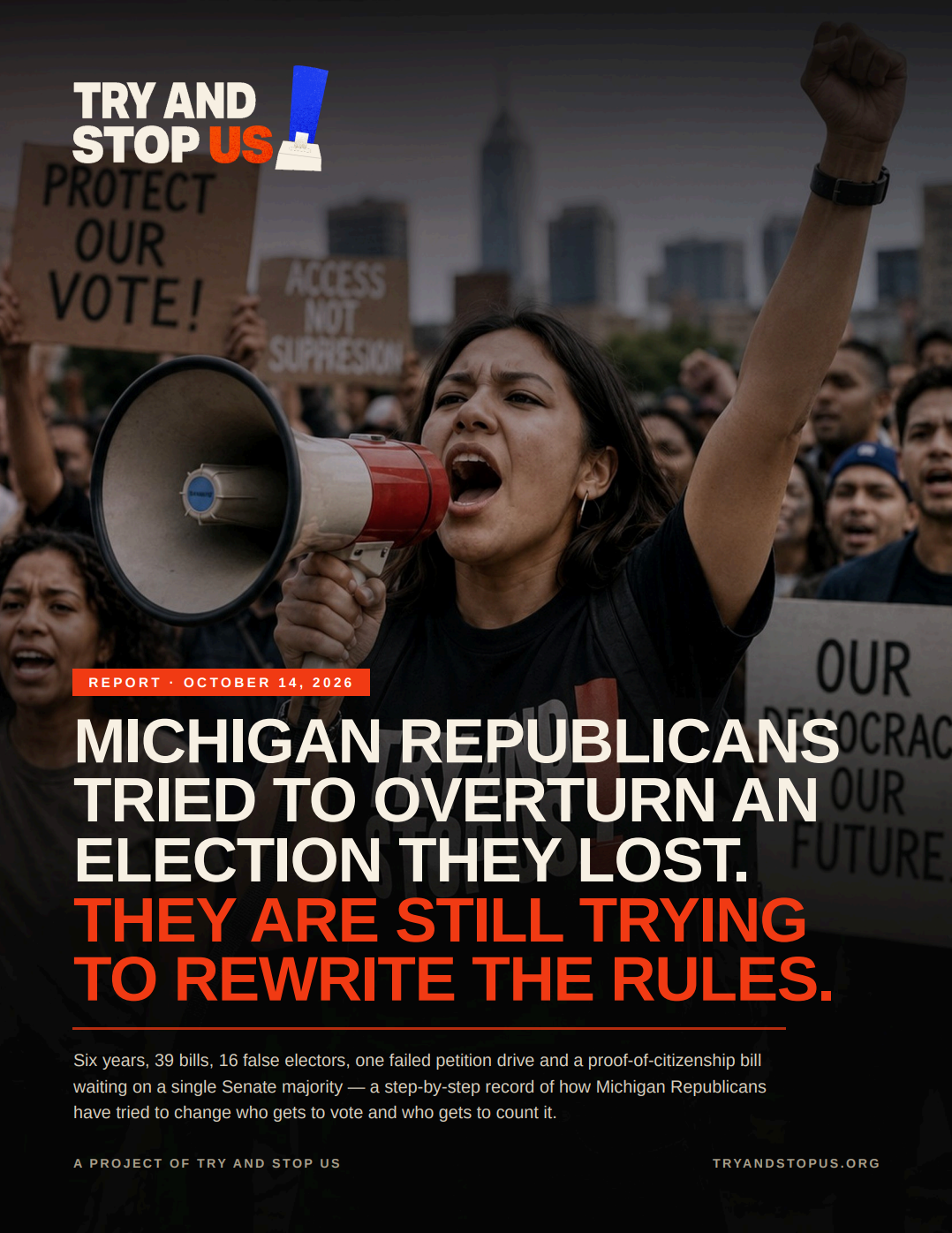
New Report: Michigan Republicans Couldn’t Overturn 2020, So They’re Trying to Decide Who Gets to Vote in 2026
Today, Try And Stop Us released a new report laying out Michigan Republicans’ six-year campaign to undo an election they lost and change who gets to vote.
Read MoreICYMI: DOJ’s Suspected Non-Citizens List Includes ‘High Percentage’ of Those Born in US
The Guardian: DoJ’s suspected non-citizens list includes ‘high percentage’ of those born in US, LA officials say
Read MoreWATCH: Rep. Joe Morelle, Norm Eisen, Marc Elias on Trump’s Final Push to Rig the Midterms
Rep. Morelle: “I’m leading the fight among House Democrats to protect our elections against these threats, and we are winning.”
Read More